Secure identity systems built to support national infrastructure and enterprise authentication needs.

Organize, govern, and leverage critical information with tools designed for compliance and performance.

Protect digital ecosystems with advanced defense layers, threat monitoring, and expert-led risk mitigation.

Secure identity systems built to support national infrastructure and enterprise authentication needs.

Organize, govern, and leverage critical information with tools designed for compliance and performance.

Protect digital ecosystems with advanced defense layers, threat monitoring, and expert-led risk mitigation.
RaulWalter has worked on dozens of technically and organizationally demanding projects that have supported the development of national identity solutions, improved data quality, strengthened system security, and shaped digital ecosystems across different regions of the world.
RaulWalter specializes in identity solutions for both public and private sector applications.
Our solutions support national eID cards, mobile identities, PKI-based infrastructures, and international standards such as eIDAS, ICAO, and ISO.
We work with governments and operators of critical systems to design scalable, cryptographically secure, and fully auditable identity platforms that enable states to deliver trusted public services both domestically and across borders.
Digital identity succeeds only when each layer — onboarding, legally valid eID, identity documents, trust services — works together as a coherent system. RaulWalter helps governments and organisations design, implement, and sustain the whole ecosystem, ensuring that every identity interaction is secure, compliant, and seamless.
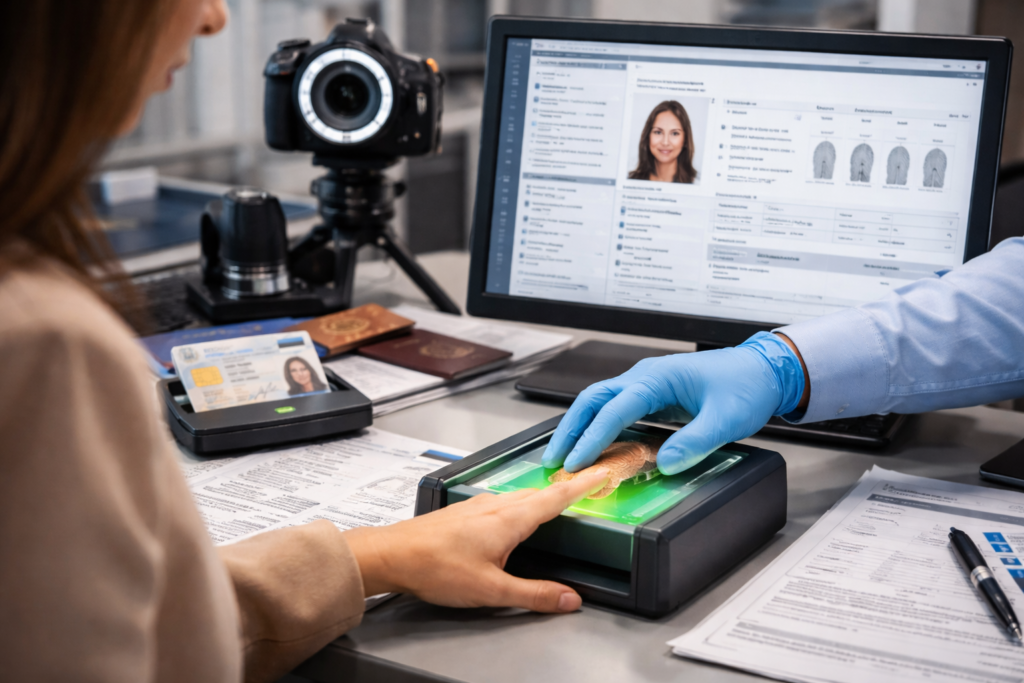
Onboarding an individual into the digital ecosystem is the starting point of identity management, where the person is identified, their data is captured, and their identity is linked to eID credentials in a controlled and verifiable manner. A well-designed onboarding process defines the quality of the entire identity lifecycle – from the accuracy of identity proofing to the security of authorisations, digital signatures and authentication.
RaulWalter designs and implements onboarding and data-capture solutions that integrate physical identification, remote identity proofing, biometrics, document verification, and risk-based assessment into a unified, coherent process. We ensure that every identity is reliably enrolled in the system, in compliance with international standards, and with a strong focus on usability, creating a solid foundation for the entire eID ecosystem.
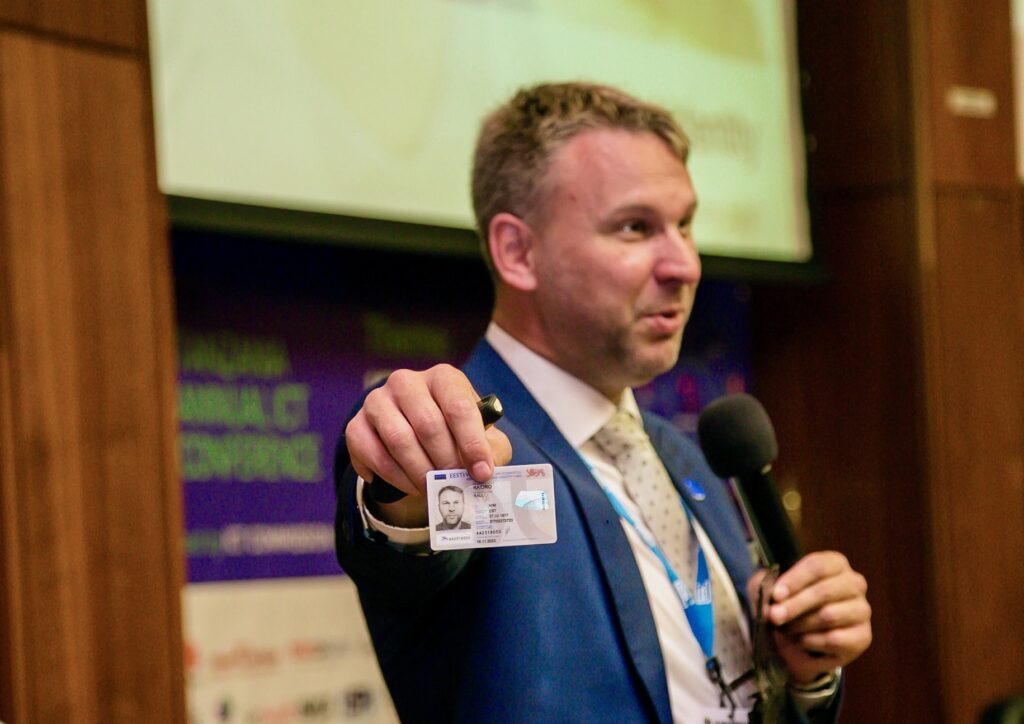
A legally valid e-identity is the most fundamental layer of identity management. It establishes the link between an individual and their digital authorisations in a manner that is uniquely verifiable and aligned with international standards. Through this layer, authentication, digital signatures and other critical actions become legally binding, enabling governments and organisations to deliver secure and scalable digital services.
The RaulWalter team supports the creation and implementation of a complete e-identity infrastructure – from registry-based identity management and issuance processes to PKI, certificates, key-management policies and digital-signature services. We assist with both strategic design and technical execution, ensuring that the resulting eID solutions are secure, auditable, and internationally recognised.
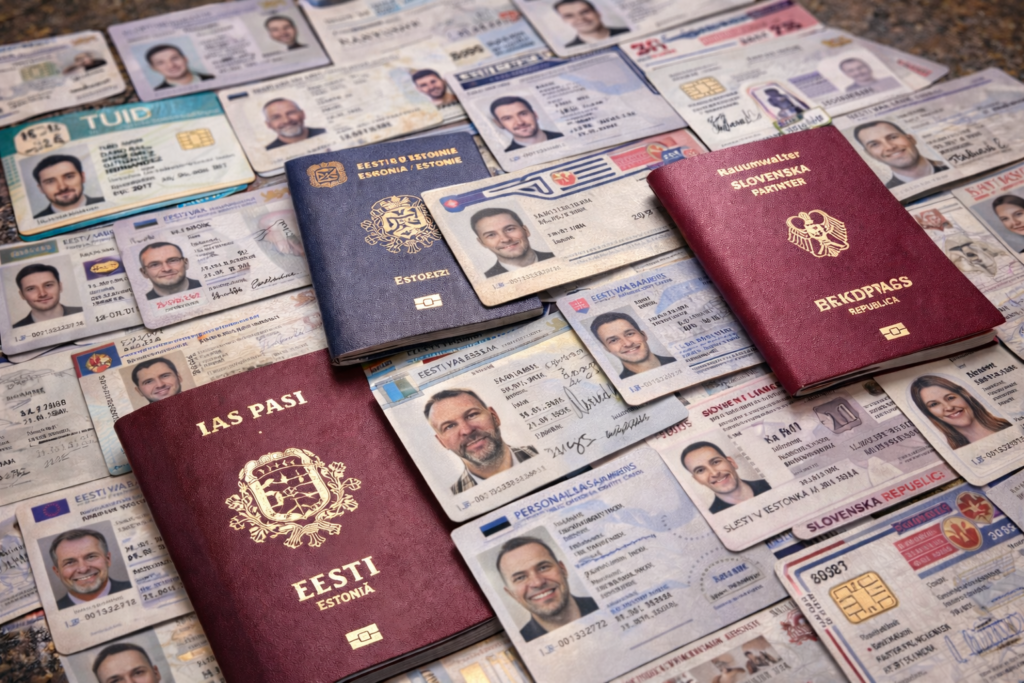
Identity documents form the intersection between physical and digital identity, proving a person’s existence and status in both domestic and cross-border services. A well-designed document – whether an ID card, passport, residence permit or any other credential – enables secure authentication, verifiable authorisations and a seamless user experience, supporting both governmental trust and citizens’ rights.
Digital signatures and signature-creation devices constitute the sustainable core of this ecosystem: cryptographically protected keys, secure chips and certificates allow users to provide legally binding signatures and confirm transactions. This directly links the identity document to the functioning of digital services—signing is not a standalone function but a critical component that connects the document to the broader eID infrastructure.
The RaulWalter team supports governments and organisations in building the entire lifecycle of identity documents: from document-standard design and security features to chip technologies, PKI certificates, key-management practices, digital-signing services and secure signature-creation devices. We help create solutions that are secure, scalable and compliant with international standards—from ICAO eMRTD profiles to eIDAS, ISO and national regulatory requirements.
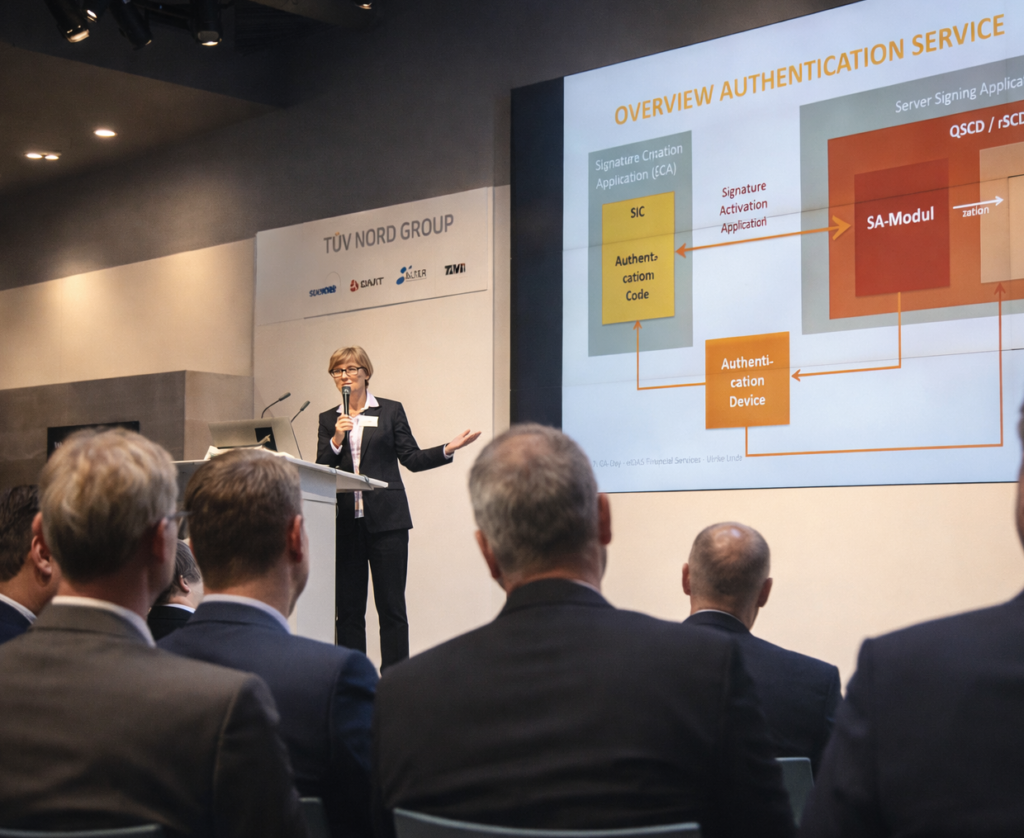
Trust services form the backbone of the digital identity and e-government ecosystem. These services provide the framework for verifying, signing and archiving electronic transactions in a way that is technically verifiable and legally binding. Certification services, timestamps, validation services and secure signature-creation devices ensure that every action is authentic, intact and provable at any point in time.
The RaulWalter team supports organisations and governments in designing and operating a complete trust-services infrastructure – from PKI architecture, CP/CPS documentation and key-management requirements to CA/RA processes, signing and validation services and achieving full eIDAS compliance. Our solutions help establish a scalable, auditable trust framework to support the development of digital services and ensure their long-term reliability.
To provide the best experiences, we use technologies like cookies to store and/or access device information. Consenting to these technologies will allow us to process data such as browsing behavior or unique IDs on this site. Not consenting or withdrawing consent, may adversely affect certain features and functions.
RaulWalter – Trusted Digital Infrastructure
We firmly believe that the internet should be available and accessible to anyone, and are committed to providing a website that is accessible to the widest possible audience, regardless of circumstance and ability.
To fulfill this, we aim to adhere as strictly as possible to the World Wide Web Consortium’s (W3C) Web Content Accessibility Guidelines 2.1 (WCAG 2.1) at the AA level. These guidelines explain how to make web content accessible to people with a wide array of disabilities. Complying with those guidelines helps us ensure that the website is accessible to all people: blind people, people with motor impairments, visual impairment, cognitive disabilities, and more.
This website utilizes various technologies that are meant to make it as accessible as possible at all times. We utilize an accessibility interface that allows persons with specific disabilities to adjust the website’s UI (user interface) and design it to their personal needs.
Additionally, the website utilizes an AI-based application that runs in the background and optimizes its accessibility level constantly. This application remediates the website’s HTML, adapts Its functionality and behavior for screen-readers used by the blind users, and for keyboard functions used by individuals with motor impairments.
If you’ve found a malfunction or have ideas for improvement, we’ll be happy to hear from you. You can reach out to the website’s operators by using the following email
Our website implements the ARIA attributes (Accessible Rich Internet Applications) technique, alongside various different behavioral changes, to ensure blind users visiting with screen-readers are able to read, comprehend, and enjoy the website’s functions. As soon as a user with a screen-reader enters your site, they immediately receive a prompt to enter the Screen-Reader Profile so they can browse and operate your site effectively. Here’s how our website covers some of the most important screen-reader requirements, alongside console screenshots of code examples:
Screen-reader optimization: we run a background process that learns the website’s components from top to bottom, to ensure ongoing compliance even when updating the website. In this process, we provide screen-readers with meaningful data using the ARIA set of attributes. For example, we provide accurate form labels; descriptions for actionable icons (social media icons, search icons, cart icons, etc.); validation guidance for form inputs; element roles such as buttons, menus, modal dialogues (popups), and others. Additionally, the background process scans all the website’s images and provides an accurate and meaningful image-object-recognition-based description as an ALT (alternate text) tag for images that are not described. It will also extract texts that are embedded within the image, using an OCR (optical character recognition) technology. To turn on screen-reader adjustments at any time, users need only to press the Alt+1 keyboard combination. Screen-reader users also get automatic announcements to turn the Screen-reader mode on as soon as they enter the website.
These adjustments are compatible with all popular screen readers, including JAWS and NVDA.
Keyboard navigation optimization: The background process also adjusts the website’s HTML, and adds various behaviors using JavaScript code to make the website operable by the keyboard. This includes the ability to navigate the website using the Tab and Shift+Tab keys, operate dropdowns with the arrow keys, close them with Esc, trigger buttons and links using the Enter key, navigate between radio and checkbox elements using the arrow keys, and fill them in with the Spacebar or Enter key.Additionally, keyboard users will find quick-navigation and content-skip menus, available at any time by clicking Alt+1, or as the first elements of the site while navigating with the keyboard. The background process also handles triggered popups by moving the keyboard focus towards them as soon as they appear, and not allow the focus drift outside it.
Users can also use shortcuts such as “M” (menus), “H” (headings), “F” (forms), “B” (buttons), and “G” (graphics) to jump to specific elements.
We aim to support the widest array of browsers and assistive technologies as possible, so our users can choose the best fitting tools for them, with as few limitations as possible. Therefore, we have worked very hard to be able to support all major systems that comprise over 95% of the user market share including Google Chrome, Mozilla Firefox, Apple Safari, Opera and Microsoft Edge, JAWS and NVDA (screen readers).
Despite our very best efforts to allow anybody to adjust the website to their needs. There may still be pages or sections that are not fully accessible, are in the process of becoming accessible, or are lacking an adequate technological solution to make them accessible. Still, we are continually improving our accessibility, adding, updating and improving its options and features, and developing and adopting new technologies. All this is meant to reach the optimal level of accessibility, following technological advancements. For any assistance, please reach out to