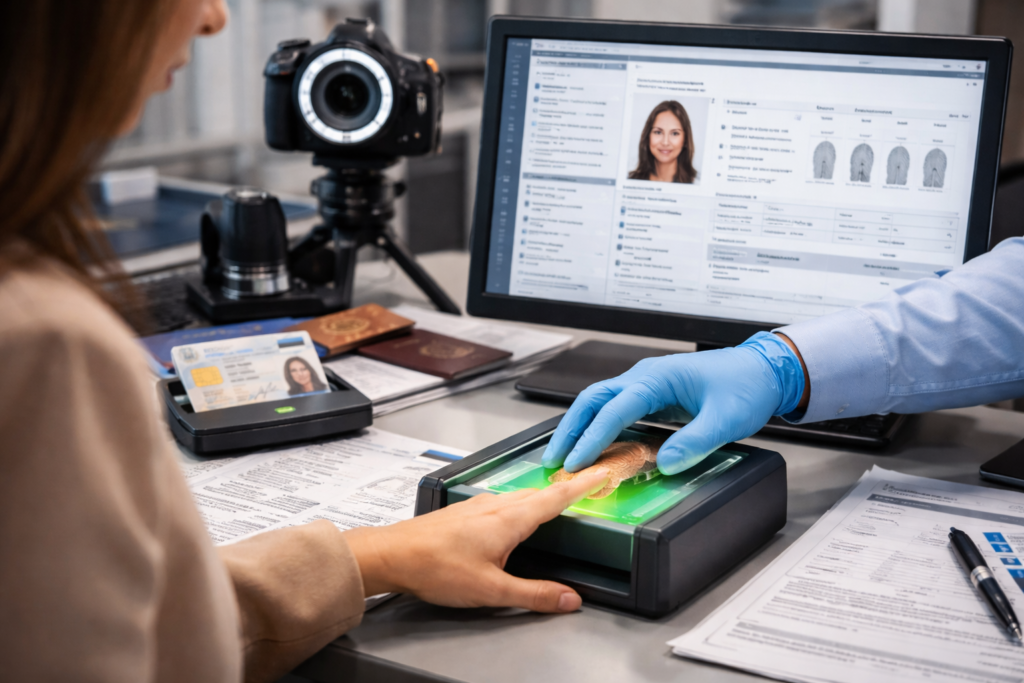
Secure identity systems built to support national infrastructure and enterprise authentication needs.

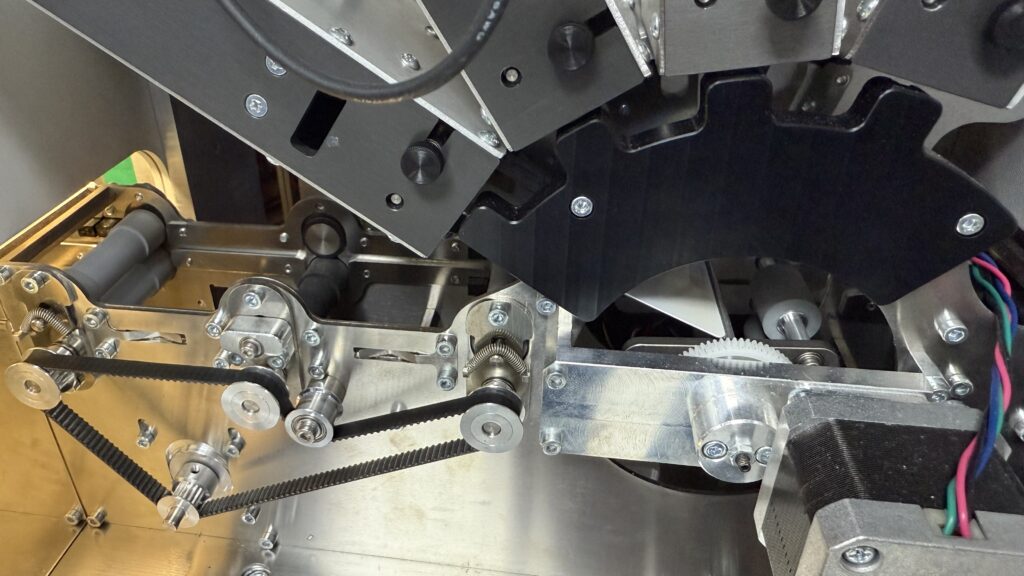
Organize, govern, and leverage critical information with tools designed for compliance and performance.

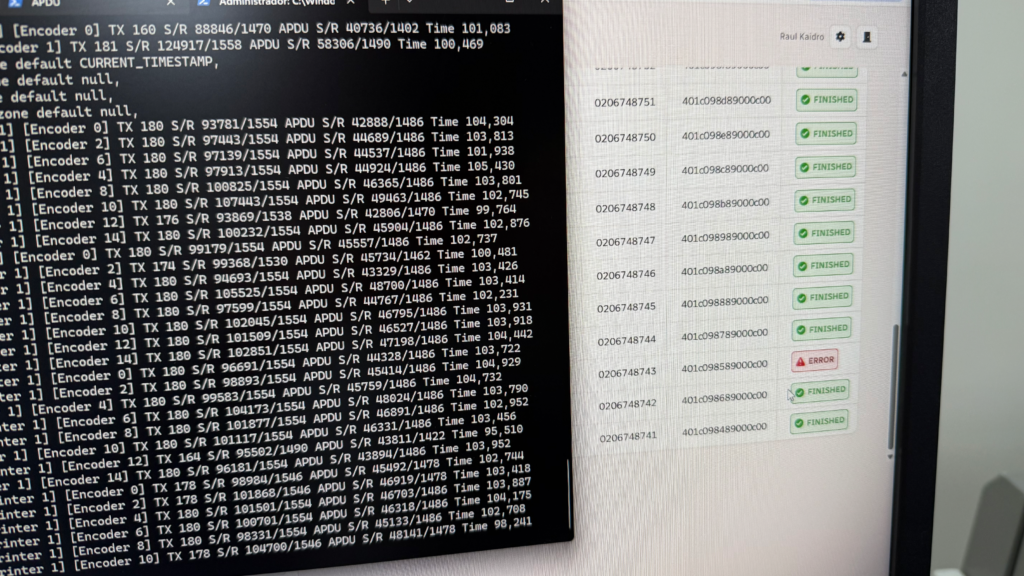
Protect digital ecosystems with advanced defense layers, threat monitoring, and expert-led risk mitigation.

Secure identity systems built to support national infrastructure and enterprise authentication needs.

Organize, govern, and leverage critical information with tools designed for compliance and performance.

Protect digital ecosystems with advanced defense layers, threat monitoring, and expert-led risk mitigation.
RaulWalter has worked on dozens of technically and organizationally demanding projects that have supported the development of national identity solutions, improved data quality, strengthened system security, and shaped digital ecosystems across different regions of the world.
RaulWalter specializes in identity solutions for both public and private sector applications.
Our personalisation solutions are developed and delivered for issuing authorities and system integrators, not as consumer or proprietary identity products. We do not issue identity documents, nor do we own the credentials or data processed through these systems. Those responsibilities remain strictly with the competent authority.
Our role is technical and operational: we design, build, and implement secure personalisation software used to produce high-assurance identity documents, including smart cards and secure credentials. This covers the full personalisation chain—from data preparation and cryptographic operations to card encoding, quality control, and audit-ready logging—within tightly regulated environments.
These systems are built to operate in national-scale production, integrated with industrial personalisation equipment and compliant with international standards and country-specific legal requirements.
In short: the authority defines and owns the identity system; we build the software that makes secure, large-scale personalisation possible.
Data capture is the foundational starting point of the personalisation process, where information from various sources is collected, validated, and structured into the datasets required to produce a secure identity document. Our solutions support multiple input types — registries, databases, external services, paper documents, biometrics, photographs, and user-provided metadata — and consolidate them into a complete, controlled data package.
The data capture process includes automated checks, quality-driven validation routines, duplicate detection, format harmonisation, biometric quality analysis, and secure workflows that ensure only correct and complete data proceeds to personalisation. Where needed, we apply data-cleansing and normalisation methods to enable reliable linkage across different registries and systems.
Our data capture solutions are designed to operate in both standalone personalisation centres and high-throughput national production environments. Their purpose is to ensure that every document receives only high-quality, technically compliant data — whether the output is an ID card, passport, residence permit, or any other secure document.
Data Preparation is a critical intermediate stage in the personalisation process, where the information obtained during data capture is formatted, cleaned, and structured into the precise technical formats required by personalisation lines, smart cards, or eMRTD profiles. This includes schema enrichment, field validation, type checking, and harmonising requirements across multiple parallel systems.
Our Data Preparation workflows support:
Data Preparation forms the technical bridge between data capture and personalisation, ensuring that only correctly formatted, validated, and fully standards-compliant data sets reach the production line. This workflow is especially critical in high-volume environments, multi-line production setups, and complex security profiles, where even minor formatting discrepancies can result in batch-level failures.
PrintFlow is a comprehensive identity document personalisation and production management platform developed by RaulWalter. It integrates data preparation, quality control, and personalisation line management into a single, reliable workflow. The solution supports high-volume production environments, multiple chip and printer technologies (including IXLA, Smartware, IDEMIA), HSM backed key management, and precise document traceability throughout the entire lifecycle.
PrintFlow ensures a stable and fully auditable production process for national ID cards, passports, and other secure documents, enabling clients to reduce errors, accelerate issuance, and maintain consistent operational quality at scale.
RaulWalter’s smartcard solutions cover the entire lifecycle of secure document chip management — from application architecture and profile configuration to key management, personalisation, testing, and production environment automation. Our expertise spans both contact and contactless cards, ICAO eMRTD profiles, JCOP/ID-A platforms, GlobalPlatform security standards, and the development and customisation of JavaCard-based applications.
We support PKI-based certificate management, cryptographic security protocols, HSM integrations, and full-scale personalisation lines using IXLA, Smartware, and IDEMIA technologies. Our solutions enable governments and critical service providers to issue high-security ID cards, residence permits, driving licences, and other national documents in a stable, transparent, and high–volume–optimised manner.
Personalisation solutions must operate in an environment where every step is traceable, controlled, and fully auditable. For this reason, our architecture supports direct integrations with reporting, quality control, and logging systems, providing precise real-time visibility into the entire production process.
These integrations include, among others:
All integrations are built on standardised interfaces (REST, SOAP, file-based transport, secure channels, signatures) and support automated data enrichment, linkage, and evidence-pack generation for end-to-end personalisation workflows.
The result is a complete, fully auditable operational chain in which every document receives a full lifecycle trace — from initial data capture to final issuance — and in which production teams have real-time visibility into quality indicators, risks, and operational anomalies.
To provide the best experiences, we use technologies like cookies to store and/or access device information. Consenting to these technologies will allow us to process data such as browsing behavior or unique IDs on this site. Not consenting or withdrawing consent, may adversely affect certain features and functions.
RaulWalter – Trusted Digital Infrastructure
We firmly believe that the internet should be available and accessible to anyone, and are committed to providing a website that is accessible to the widest possible audience, regardless of circumstance and ability.
To fulfill this, we aim to adhere as strictly as possible to the World Wide Web Consortium’s (W3C) Web Content Accessibility Guidelines 2.1 (WCAG 2.1) at the AA level. These guidelines explain how to make web content accessible to people with a wide array of disabilities. Complying with those guidelines helps us ensure that the website is accessible to all people: blind people, people with motor impairments, visual impairment, cognitive disabilities, and more.
This website utilizes various technologies that are meant to make it as accessible as possible at all times. We utilize an accessibility interface that allows persons with specific disabilities to adjust the website’s UI (user interface) and design it to their personal needs.
Additionally, the website utilizes an AI-based application that runs in the background and optimizes its accessibility level constantly. This application remediates the website’s HTML, adapts Its functionality and behavior for screen-readers used by the blind users, and for keyboard functions used by individuals with motor impairments.
If you’ve found a malfunction or have ideas for improvement, we’ll be happy to hear from you. You can reach out to the website’s operators by using the following email
Our website implements the ARIA attributes (Accessible Rich Internet Applications) technique, alongside various different behavioral changes, to ensure blind users visiting with screen-readers are able to read, comprehend, and enjoy the website’s functions. As soon as a user with a screen-reader enters your site, they immediately receive a prompt to enter the Screen-Reader Profile so they can browse and operate your site effectively. Here’s how our website covers some of the most important screen-reader requirements, alongside console screenshots of code examples:
Screen-reader optimization: we run a background process that learns the website’s components from top to bottom, to ensure ongoing compliance even when updating the website. In this process, we provide screen-readers with meaningful data using the ARIA set of attributes. For example, we provide accurate form labels; descriptions for actionable icons (social media icons, search icons, cart icons, etc.); validation guidance for form inputs; element roles such as buttons, menus, modal dialogues (popups), and others. Additionally, the background process scans all the website’s images and provides an accurate and meaningful image-object-recognition-based description as an ALT (alternate text) tag for images that are not described. It will also extract texts that are embedded within the image, using an OCR (optical character recognition) technology. To turn on screen-reader adjustments at any time, users need only to press the Alt+1 keyboard combination. Screen-reader users also get automatic announcements to turn the Screen-reader mode on as soon as they enter the website.
These adjustments are compatible with all popular screen readers, including JAWS and NVDA.
Keyboard navigation optimization: The background process also adjusts the website’s HTML, and adds various behaviors using JavaScript code to make the website operable by the keyboard. This includes the ability to navigate the website using the Tab and Shift+Tab keys, operate dropdowns with the arrow keys, close them with Esc, trigger buttons and links using the Enter key, navigate between radio and checkbox elements using the arrow keys, and fill them in with the Spacebar or Enter key.Additionally, keyboard users will find quick-navigation and content-skip menus, available at any time by clicking Alt+1, or as the first elements of the site while navigating with the keyboard. The background process also handles triggered popups by moving the keyboard focus towards them as soon as they appear, and not allow the focus drift outside it.
Users can also use shortcuts such as “M” (menus), “H” (headings), “F” (forms), “B” (buttons), and “G” (graphics) to jump to specific elements.
We aim to support the widest array of browsers and assistive technologies as possible, so our users can choose the best fitting tools for them, with as few limitations as possible. Therefore, we have worked very hard to be able to support all major systems that comprise over 95% of the user market share including Google Chrome, Mozilla Firefox, Apple Safari, Opera and Microsoft Edge, JAWS and NVDA (screen readers).
Despite our very best efforts to allow anybody to adjust the website to their needs. There may still be pages or sections that are not fully accessible, are in the process of becoming accessible, or are lacking an adequate technological solution to make them accessible. Still, we are continually improving our accessibility, adding, updating and improving its options and features, and developing and adopting new technologies. All this is meant to reach the optimal level of accessibility, following technological advancements. For any assistance, please reach out to